Residential Plumbing For
Everything Your Home
Depends On
Before the day begins, your plumbing has already refilled toilet tanks, kept water available at every faucet, held supply lines under pressure and kept drains ready to carry wastewater away. Then come the showers, laundry, cooking, cleaning, dishwasher cycles, baths, handwashing and hot water your household uses without thinking about the network behind it.
Snake ’n’ Rooter provides residential plumbing service for that complete network. We help homeowners understand how a visible problem relates to the rest of the home, restore what is no longer working and plan responsibly for the fixtures, equipment and piping that will eventually need attention.
Serving Lee’s Summit Since 1978
600+ Five - Star Reviews
24/7 Emergency Plumbers
Same-Day Plumbing Service Available
8 in 10 Jobs Come From Returning Customers

The Plumbing Behind Daily Life
Your Home Runs on More Plumbing Than You Can See
Most residential plumbing is designed to disappear. Supply piping runs behind walls and below floors. Drain and vent lines connect rooms that may be stories apart. A water heater or sump pump works out of sight until something changes.
What you see (the faucet, toilet, shower, appliance, or floor drain) is only the point where the larger system becomes usable.
In The Kitchen
A kitchen may rely on a hot and cold faucet, sink drain, garbage disposal, dishwasher supply and drain, refrigerator or ice maker line, shut off valves and gas piping for qualifying appliances. One wet cabinet can have several possible sources. A slow sink can involve the trap, branch drain, or a problem shared with another fixture.
In Each Bathroom
A bathroom connects the home's water supply, hot water system, drainage, and venting in one compact area. Toilets, sink faucets, shower valves, tub spouts, traps, seals, supply lines, and shut-offs must work without allowing clean water and waste water to cross paths.
In The Laundry Area
The washer depends on hot and cold supply valves, hoses, a drain connection, and an approved discharge arrangement. A utility sink adds another faucet, trap, and branch drain. Because washing machines move a significant amount of water quickly, a weak hose, loose connection, or restricted drain can create damage before it is noticed.
In Utility and Mechanical Areas
The water heater, main shut off, pressure control components, sump pump, sewage ejector equipment, and water treatment equipment may be concentrated in a basement, garage, or utility room. They influence reliable hot water, manageable pressure, usable lower-level plumbing, and protection during wet conditions.
Outside The Living Space
The main water service brings water to the property. The building drain and sewer connection carry waste water away. Exterior hose connections, buried piping, and discharge lines remain exposed to weather, soil movement, freezing conditions, and physical damage.
A Whole-Home View
Seven Connected Systems Keep a Home Functioning
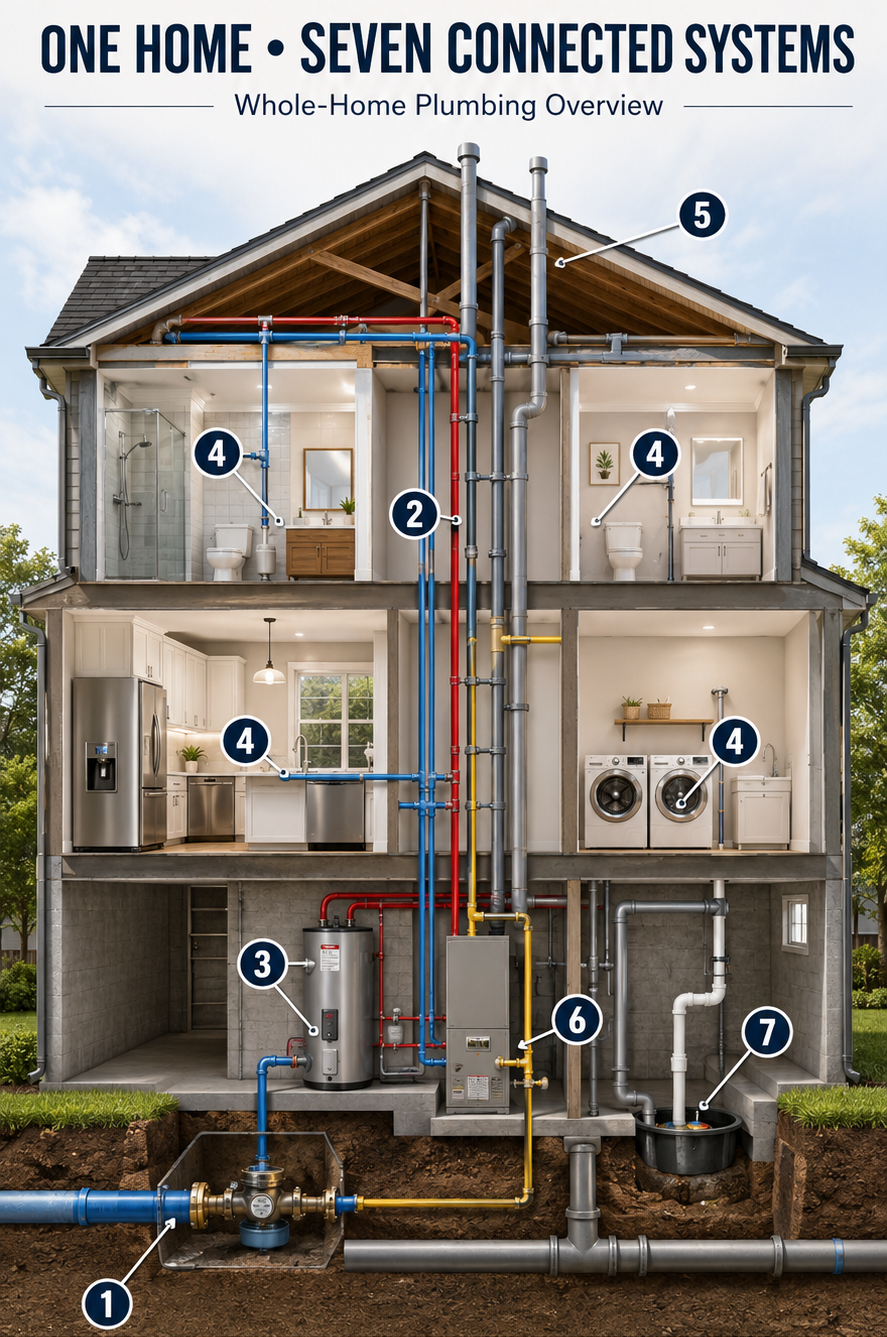
Incoming Water Supply Service
Brings the available water supply to the home and provides water to every plumbing fixture.
Interior Water Distribution
These are the pipes which move pressurized hot and cold water through the branch piping, valves, and fixture connections.
Hot-Water Production & Delivery
Your hot water heater heats, stores, and delivers hot water for bathing, cleaning, laundry, and sanitation.
Fixtures & Appliance Connections
Make the plumbing usable and add local controls, supplies, drains, hoses, and connections.
Drains, Waste piping, & Venting.
Move waste water away from toilets, showers, sinks while helping the drainage system balance air and flow.
Residential Gas Piping
Supports qualifying water heaters, ranges, dryers, fireplaces, and other approved appliances.
Groundwater & Lower Level Protection
Uses sump pumps and ejector equipment where water cannot be managed by the home's other systems to remove water out of the home.
How The Systems Work Together
What Each Residential Plumbing System Does
The first place a homeowner notices a problem is not always where the problem begins. A residential plumber compares the visible symptom with the system serving it.
The Incoming Water Service
Every faucet, toilet, shower, and water-using appliance depends on water reaching the home. A widespread pressure loss, interrupted service, unexplained wet area outside, or sudden change at multiple fixtures may require investigation of the water lines serving the home not separate repairs in every room.
The main service is different from the smaller branch piping inside the home. Knowing that boundary prevents a whole house supply problem from being mistaken for a bad faucet.
Interior Water Distribution
Distribution piping carries water toward fixtures, appliances, and the water heater. Branch lines divide the flow. Shut-off valves provide control. Supply tubes and connectors make the final transition to the fixture.
A weakened fitting or damaged pipe can leak continuously until the water is shut off. Visible dripping, hidden moisture, water stains, sounds of running water, or unexplained water use can call for pipe and leak evaluation that traces the source before opening finished surfaces or replacing components. The right question is not "Where is the water?" It is "Which pressurized component is allowing it to escape?"
Hot Water Production and Delivery
The water heater supplies hot water for bathing, hand washing, dish washing, laundry, cleaning, and sanitation. A loss of hot water can involve, the heating source, controls, internal components, valves, venting, electrical or gas service, sediment, household demand, or the plumbing connected to the unit.
Water around the tank does not automatically mean the tank itself failed. Proper water heater diagnosis and service should identify whether the source is the equipment, a valve, a discharge pipe, or nearby plumbing before repair or replacement is discussed.
Fixtures and Appliance Connections
Faucets control flow. Toilets manage flushing and refilling. Shower valves blend hot and cold water. Sinks, tubs, and basins collect water and direct it to the main drain. Dishwashers, washing machines, refrigerators, ice makers, garbage disposals, and qualifying gas appliances can add more supplies, drains, valves, and hoses.
A residential plumbing repair should establish whether the fixture itself failed or whether the problem began in the piping, pressure, drainage, or equipment serving it. Replacing a visible fixture will not solve a problem that actually begins behind it.
Drains, Waste Piping, and Venting
Used water must leave through fixture drains, traps, branch lines, and the larger building drain before reaching the sewer connection. Traps help block sewer gases. Venting helps the drainage system move air and wastewater correctly.
One slow sink may be local. Several drains slowing, gurgling, or backing up together can point to a shared drain or sewer problem. Drain and sewer service becomes the better path when the evidence extends beyond one fixture.
Gas Piping for Qualifying Home Appliances
Some homes depend on gas piping for water heating, cooking, clothes drying, fireplaces, and other qualifying appliances.
Planned residential gas line work may involve inspection, repair, replacement, or a new qualifying appliance connection.
If gas odor is present, leave the home without operating switches or appliances. Contact emergency services and the gas utility from a safe location. Plumbing work begins only after the property is safe to enter.
Groundwater & Lower-Level Protection
Sump pumps help remove groundwater that collects below or around vulnerable areas. Sewage ejector equipment may be required when lower-level fixtures cannot drain by gravity. These systems can remain unnoticed until weather or use puts them under load. Residential sump pump services should evaluate the pump, activation, basin conditions, discharge path, and related components needed to understand whether the system is ready to perform.
Know When The Situation Changes
When Residential Plumbing Becomes Urgent
Routine residential service and emergency plumbing are not the same job. Call for emergency plumbing help when water or wastewater cannot be contained, damage is actively increasing, essential plumbing becomes suddenly unusable or the condition creates a sanitation or safety concern
Visit our emergency plumbing page, which explains immediate safety containment and what to do before help arrives.
Examples That Need Immediate Attention.
- A burst pipe or uncontrolled water release
- Sewage entering the home
- An overflowing fixture that will not stop
- A failed shutoff valve during an active leak
- A water heater leak threatening surrounding materials
- A failed sump pump while water is rising
- No water to the property
- A possible gas leak
Emergency Plumbing Service is available 24 hours a day, seven days a week.
A Residential Relationship, Not A One-Off Task
Experience That Extends Beyond One Fixture
Eight out of ten plumbing repair jobs are from repeat customers. This is because your plumbing needs change over time and you need a reliable plumbing company on speed. One visit may involve a fixture, another may involve hot water, drainage, a hidden leak, a sump pump, or a planned improvement.
Our fully stocked service vehicles help technicians complete many common residential repairs without a separate trip for standard parts
Serving Local Families Since 1978
Fully Stocked Service Trucks
Same-Day Service
24/7 Emergency Service Availability
Common Questions
Residential Plumbing FAQs
Here are the answers to the most common questions we get about residential plumbing.
What does a residential plumber work on?
A residential plumber works on systems that bring water into the home, distribute hot and cold water, serve fixtures and appliances, carry waste water away, supply qualifying gas appliances, and help protect lower levels from groundwater. That can include diagnosis, repair, replacement, installation, testing, remodeling support, and maintenance.
How many things in a home depend on plumbing?
Nearly every routine involving water or wastewater depends on:
- plumbing
- toilets
- showers
- sinks
- tubs
- faucets
- dishwashers
- washing machines
- refrigerators
- ice makers
- water heaters
- utility sinks
- floor drains
- exterior hose connections
- lower-level pumps
The important point is not in a universal fixture count. These components connect a shared supply, hot water, drainage, sewer, gas, and protection systems.
Do you work in older and newer homes?
Yes older homes may contain original materials, partial replacements, and several generations of remodeling. Newer homes can still experience installation defects, damaged connections, equipment failures, or problems caused by use. The recommendation should be based on actual materials, condition, and symptoms not age alone.
Can a plumber tell whether a problem affects the whole house?
In many cases comparing fixtures and systems helps establish whether the problem is local or broader. The technician may compare:
- hot and cold water
- several fixtures
- different floors
- drain behavior
- pressure
- visible piping or equipment operation
Concealed conditions can require additional testing or responsible access.
Do I need a plumber for a home purchase?
A plumber can investigate specific concerns identified by the buyer, seller, or home inspector. The goal is not to repeat the entire inspection. It is to provide a deeper plumbing evaluation where the condition, repair scope, or expected consequence is unclear.
What residential plumbing maintenance is worthwhile?
Maintenance should focus on important control points and failure risks:
- Shut-off valves
- Exposed supply connections
- Water heater operation
- Sump pump readiness
- Recurring drain behavior
- Visible corrosion
- Unexplained moisture
- Components already being monitored
How quickly can residential service be scheduled?
Scheduling depends on:
- service region
- time of the request
- technician availability
- urgency
- type of work
Same-day service is available for qualifying calls but is not a universal arrival or completion promise.
Will I receive an estimate before work begins?
Snake ’n’ Rooter provides an upfront estimate before approved work begins. The homeowner should understand the identified problem, proposed scope, included work, and known limitations before authorization.
Keep The Plumbing Behind Your Home Working For The Life Happening Inside It.
You do not need to know which pipe, valve, or plumbing component is causing issues. Tell Snake ’n’ Rooter what changed, where you noticed it, and how it's affecting daily life. We'll help determine whether the next step is diagnosis, repair, replacement, or emergency help is the right choice.
